2025.11.28
里山の暮らしを 紡いでいく
SU Interview vol.01
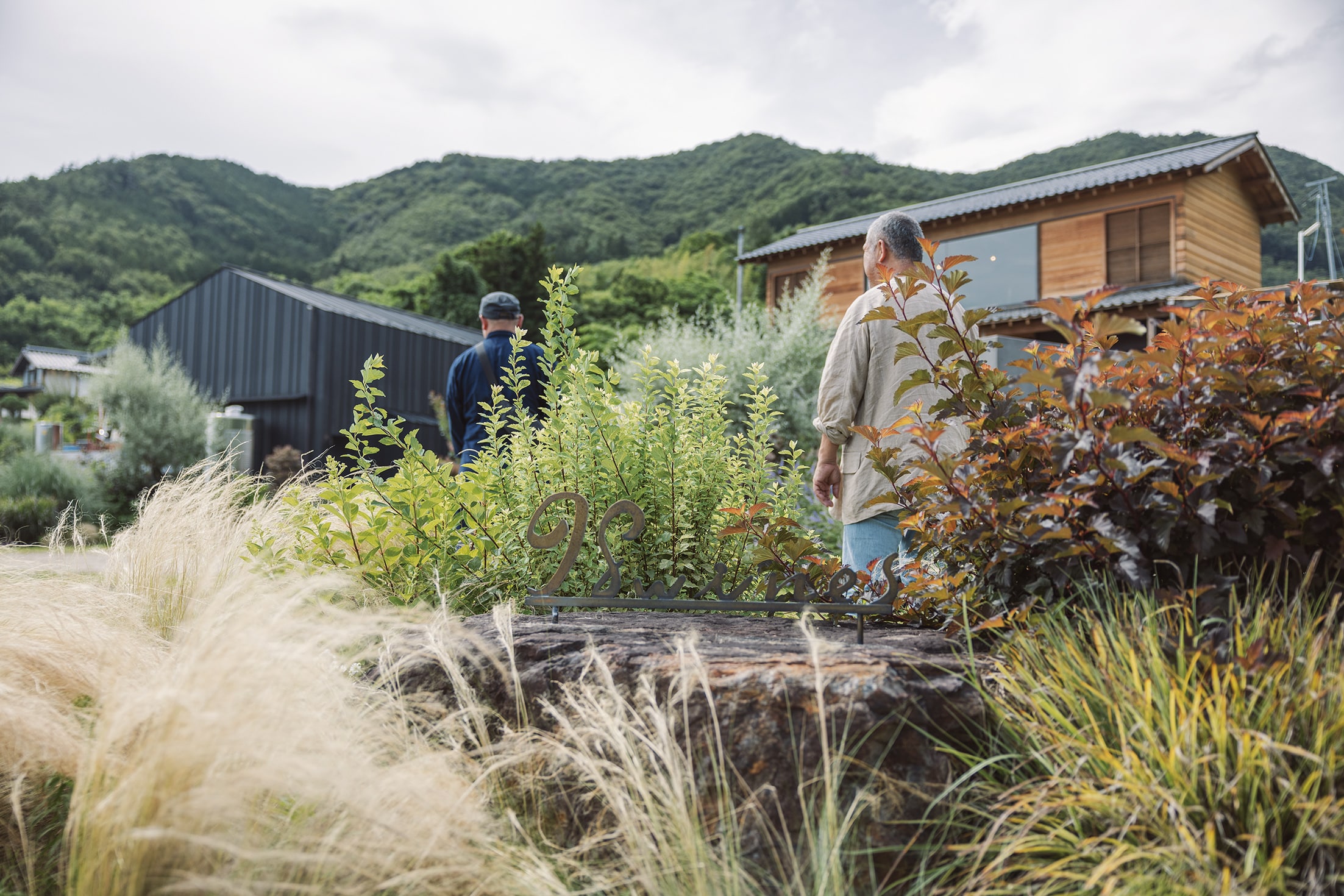
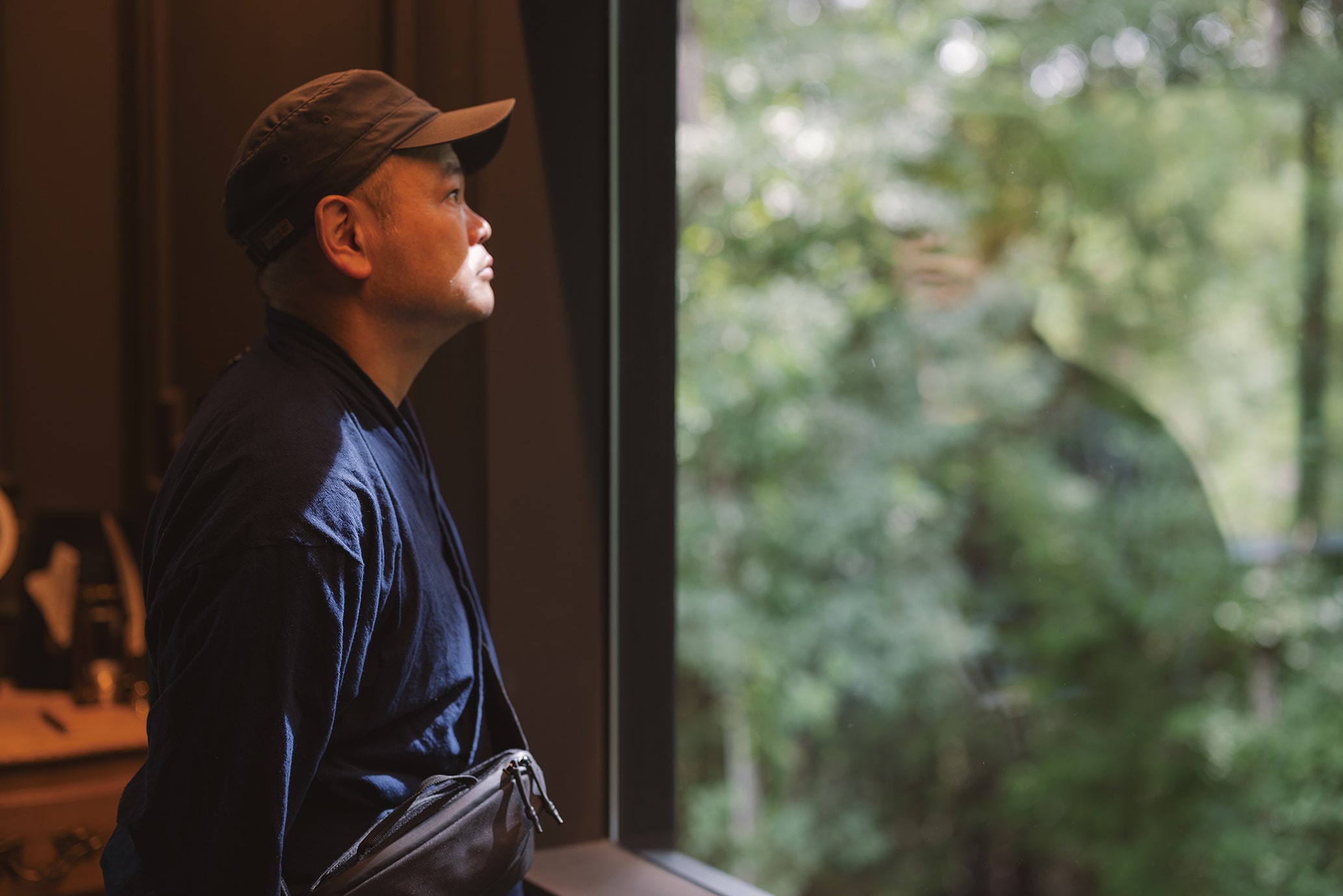
これからのものづくりや心地よい働き方、豊かな暮らしについて、代表の今井久志が対話からヒントを探る連載。第1回目のゲストは、甲州市で98WINEsを運営するワイン醸造家の平山繁之さんです。屋号の「98」に込められているのは、さまざまなものと結びつくことで不完全な98が100にも200にもなれると信じる思い。60歳で独立した平山さんはこれまでどんなものに出会い、何を大切に生きてきたのか。二人の話に耳を傾けてみましょう。
This series follows conversations in which SOBOKUYA’s representative, Hisashi Imai, explores ideas for future craftsmanship, fulfilling ways of working, and richer ways of living.
The first guest is Shigeyuki Hirayama, a winemaker who runs 98WINEs in Koshu City. The name “98” reflects his belief that something incomplete—like the number 98—can become 100 or even 200 when it connects with people, places, and ideas.
Having started his independent journey at the age of sixty, Hirayama has crossed paths with many things. What has he encountered, and what values have guided his life?
Let’s listen in on the conversation between the two.
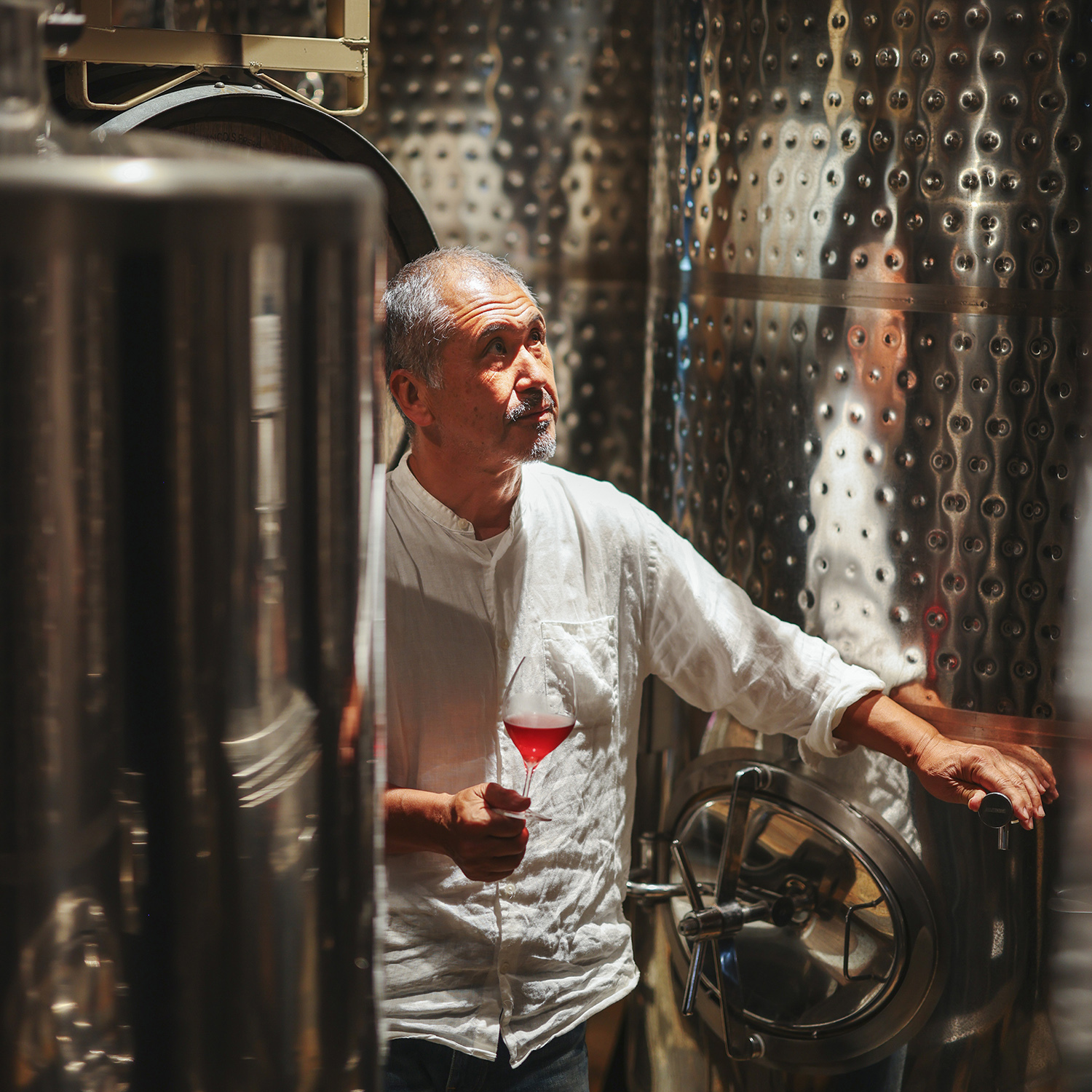
平山繁之
Shigeyuki Hirayama
1958年、神奈川県横浜市生まれ。ワイン醸造家・98WINEs合同会社代表。フランスの美術学校で美術を学んだ後、1981年から2007年までメルシャンにて醸造、品質管理、製品開発を行う。同社退社後は勝沼醸造で専務、副社長を歴任。2017年に独立後、98WINEs合同会社を立ち上げ、現在に至る。
Born in 1958 in Yokohama, Kanagawa Prefecture. Winemaker and Representative of 98WINEs LLC.
After studying fine arts at an art school in France, he worked at Mercian Corporation from 1981 to 2007, engaging in winemaking, quality control, and product development.
Following his departure from the company, he served as Executive Director and later Vice President at Katsunuma Jozo Winery.
In 2017, he became independent and founded 98WINEs LLC, where he continues his work today.
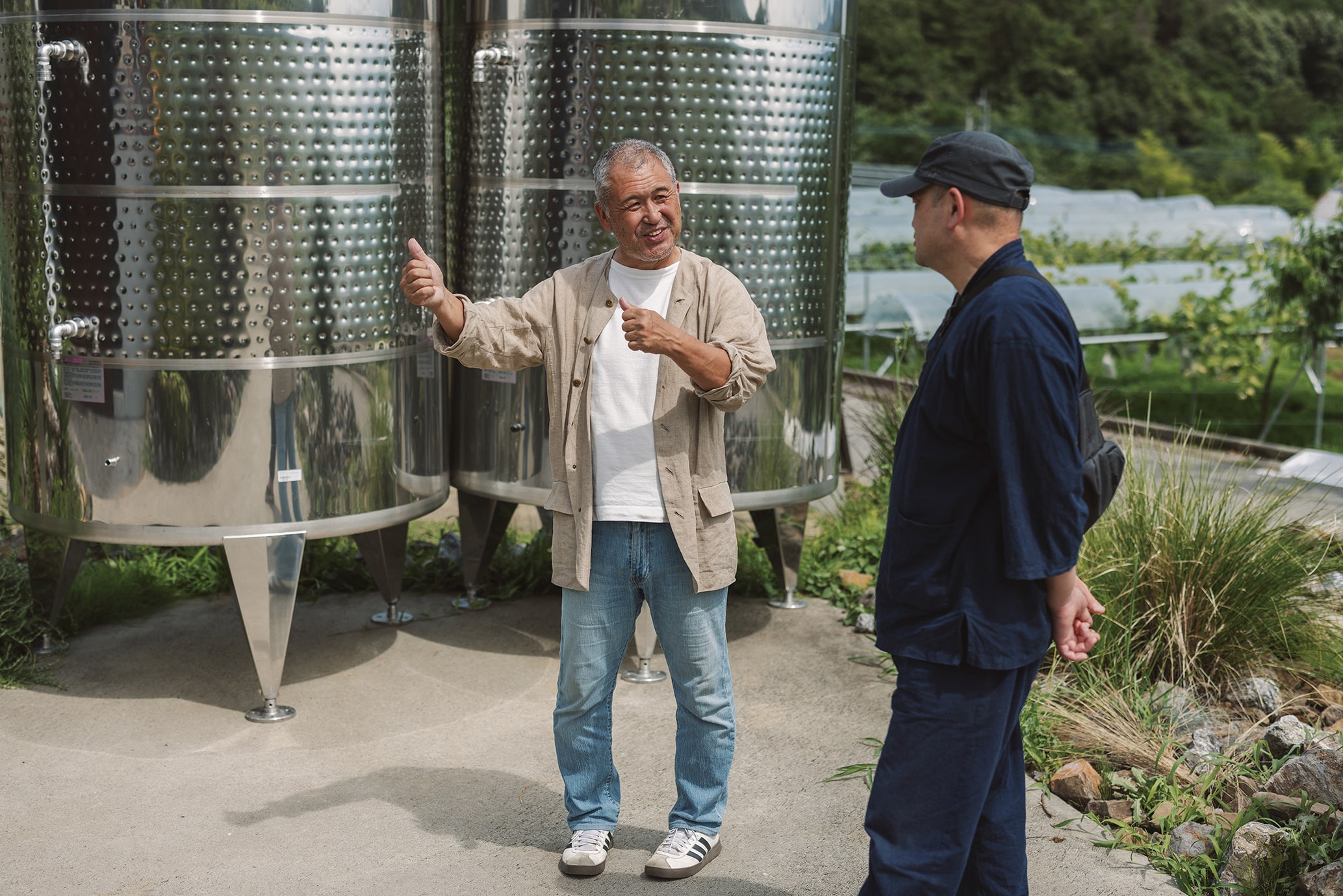
お互いさまの感覚を大事にしたい
Valuing the Spirit of Mutual Care
今井 眺めがいい場所ですね。なぜこの場所を選ばれたんですか?
IMAI It’s a beautiful place with such a wide view. What made you choose this location?
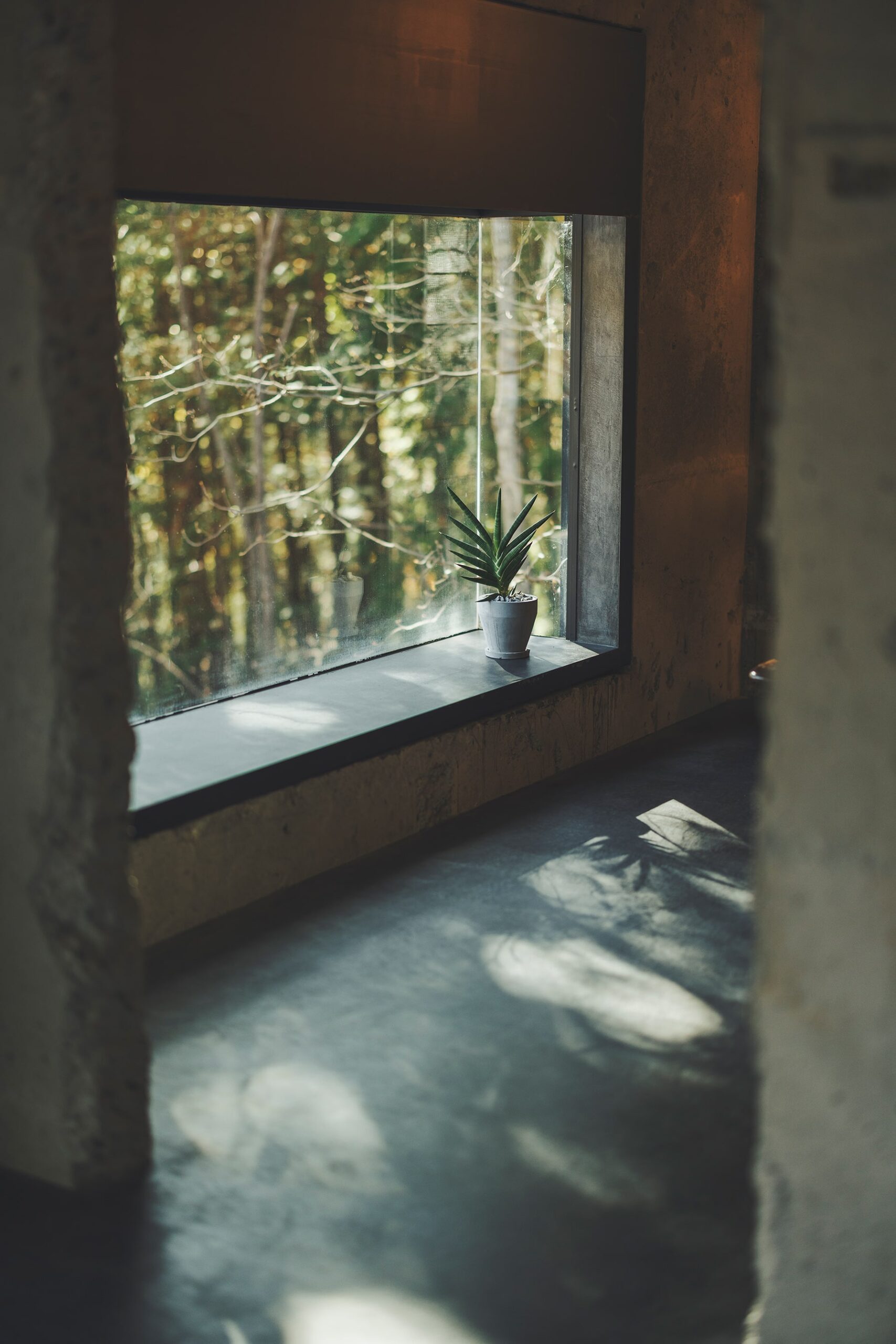
平山繁之さん(以下、平山) 富士山を望むこの景観ですね。僕のベースは勝沼にあったので、実は勝沼で場所を提供してくれる方が元々いたんですよ。そちらの小さな古民家を改装して、当初は設計士も入れずに自分でやろうとしていましたが、この景色を見て場所を急遽変えることにしました。富士山にそぐう建物にしたいと思い設計士を探す中で、自宅から一番近い設計事務所の坂野由美子さんに出会い、ワイナリーを新築し、その後ブルワリーから宿までお願いすることになりました。
HIRAYAMA It was really the view of Mount Fuji. My base had originally been in Katsunuma, and in fact, there was someone there who had offered me a place to use. The initial plan was to renovate a small old farmhouse in Katsunuma, and I was thinking of doing the work myself without involving an architect.
But once I saw this scenery, I immediately decided to change locations. I wanted a building that would be in harmony with Mount Fuji, so while searching for an architect, I met Yumiko Sakano, whose studio happened to be the closest to my home. She designed the new winery, and afterward, I asked her to work on everything—from the brewery to the lodging facilities.
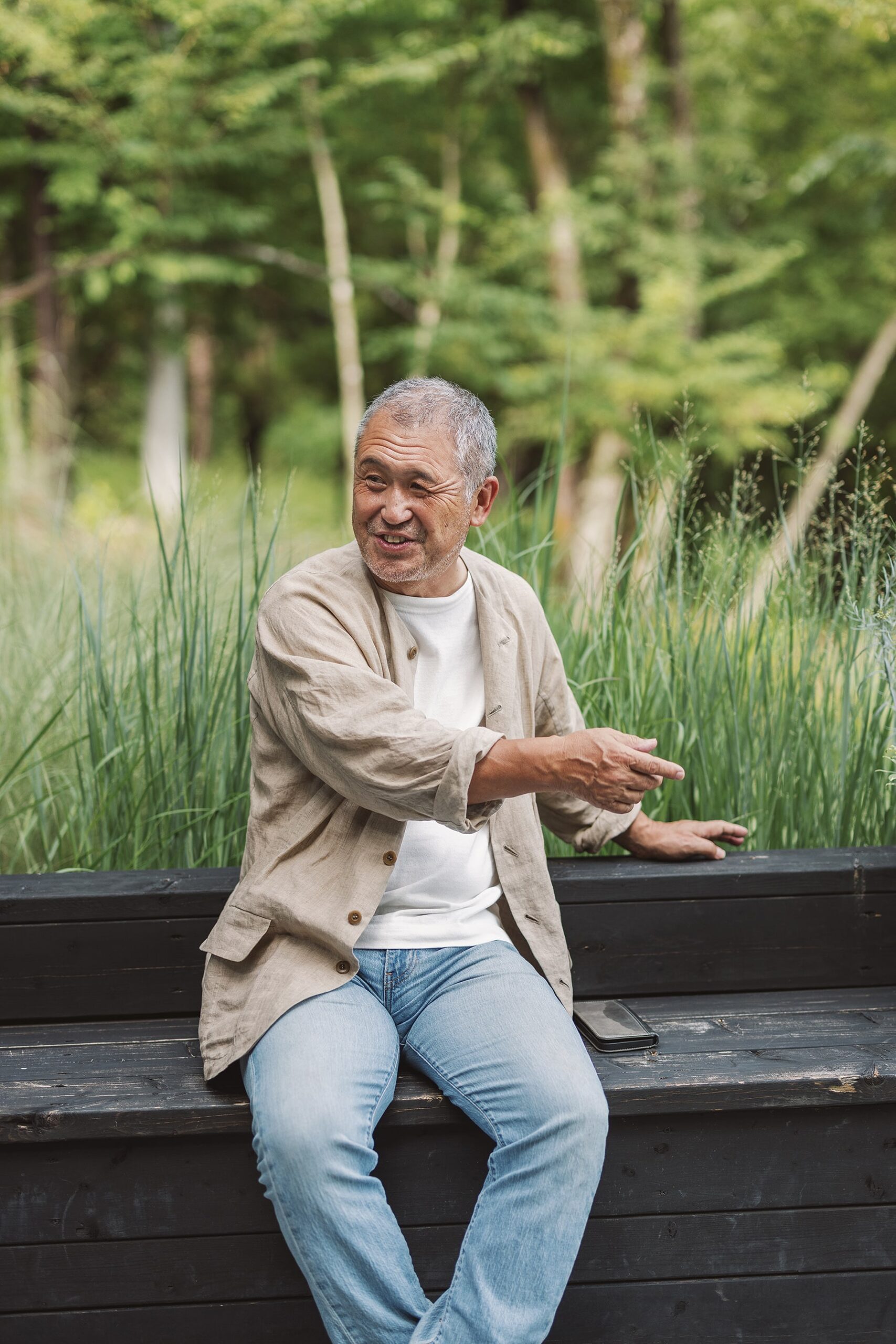
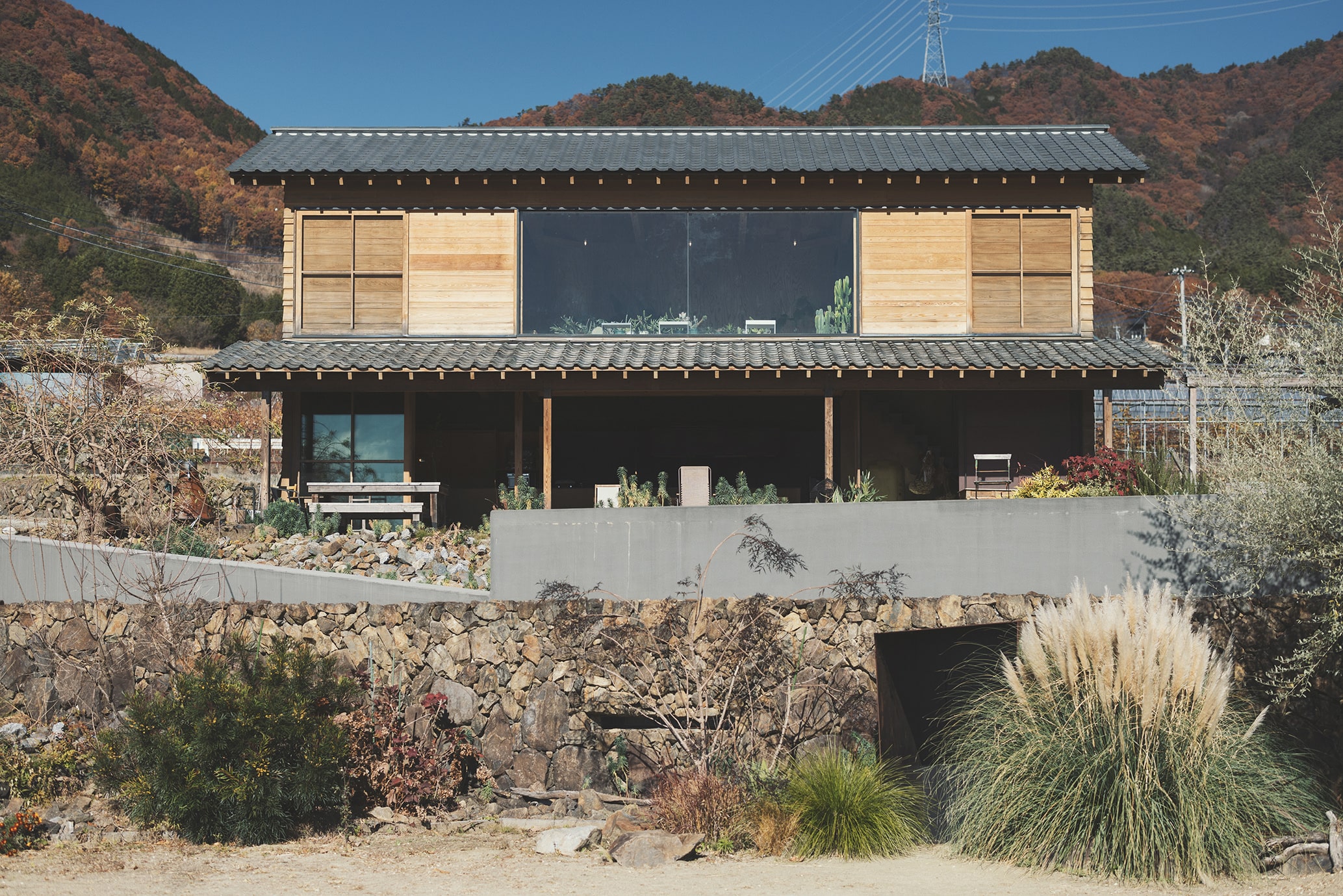
今井 石と鉄、木とサボテン。異質な素材の並びと、斜面と建築の関係性が面白いですね。平山さんの仕事に対する姿勢についても伺いたいです。
IMAI Stone and iron, wood and cacti — the mix of contrasting materials, along with the relationship between the slope and the architecture, is fascinating. I’d also like to ask about your approach to your work.
平山 基本的に会社自体のスタンスというのは決めてないんですよ。ただ、向かっていく方向や思想は、お客さんと話しながら、お客さんに言っているフリをして社員にも聞こえるように説明していますね。それを何回も繰り返します。あとはもう自由で、打ち合わせも会議も一切しません。好きに働いてもらっています。
HIRAYAMA I don’t have a fixed stance for the company, fundamentally. But when it comes to the direction we’re heading or the underlying philosophy, I talk about it with our customers — wording it as if I’m speaking to them, but in a way that my staff can hear. I repeat this many times.
Other than that, everything is free. We don’t have meetings or conferences at all. Everyone works in the way they prefer.
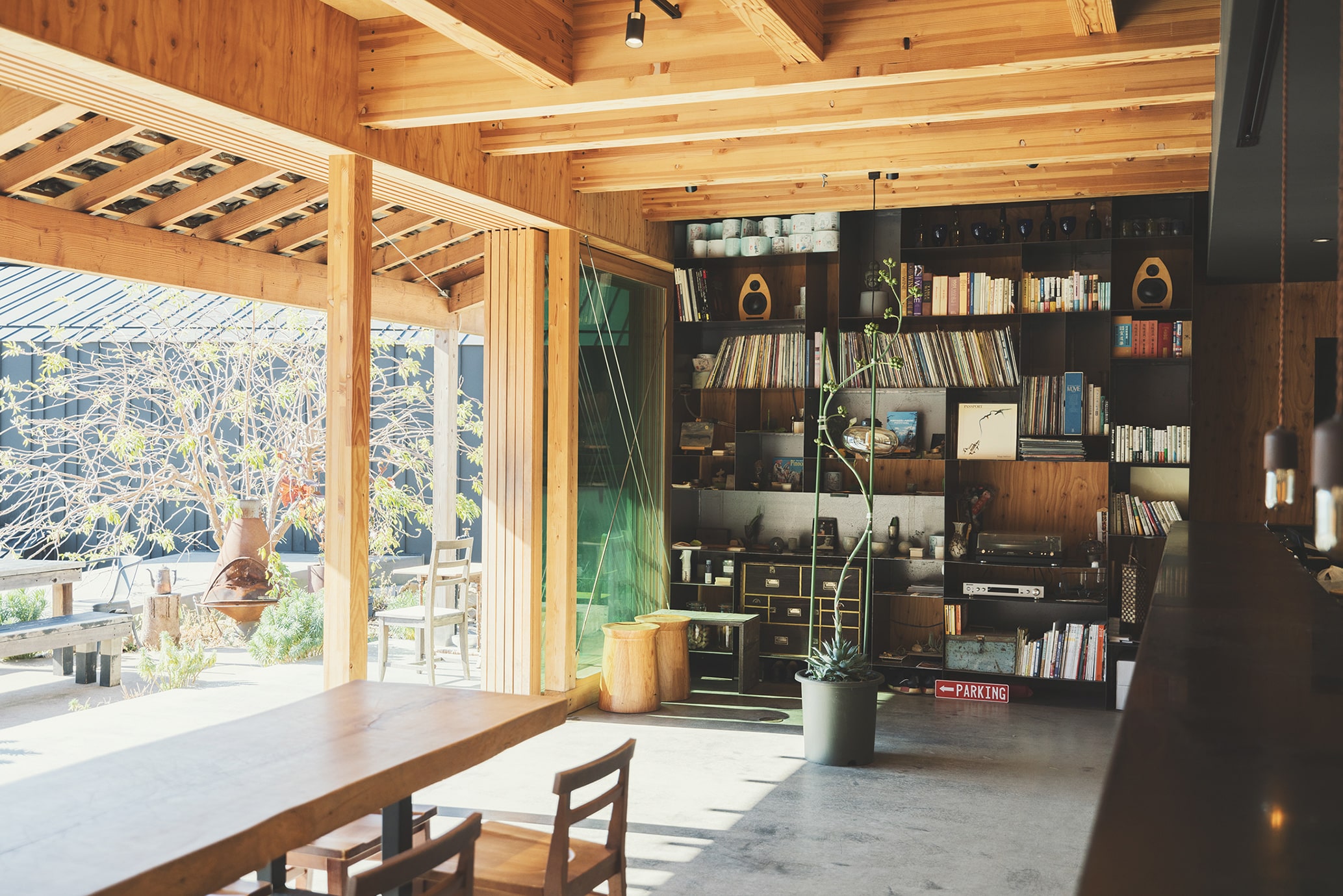
今井 先ほどワインのつくり方を教えてもらいましたが、すごくシンプルじゃないですか。年によって違うということは、ぶどうの出来にワインの出来が思いっきり左右されるということですよね。畑もこの辺りにあるんですか?
IMAI Earlier, you explained how you make your wine, and I was struck by how simple the process is. Since it changes from year to year, that means the quality of the grapes has a huge influence on the wine, right? Are your vineyards located around here as well?
平山 周辺にいくつかあって、同じ品種なので同じ場所にはつくっていないんですよ。場所を変えることで仕事を数日ずらすことができるからです。ここを始めて8年経ち畑の良し悪しもわかってきたので、いい畑を地元の方に譲っています。
HIRAYAMA There are several around here, but we don’t grow the same variety in the same place. By changing the locations, we can shift the timing of the work by a few days. It’s been eight years since we started here, and by now I’ve come to understand which vineyards are good and which aren’t, so I’ve been handing over the good ones to local growers.
今井 譲るんですか? それはなぜですか?
IMAI You hand them over? Why is that?
平山 畑を譲った方が生産して、そこから買えばお金が回りますよね。僕たちよりも栽培の教育は済んでいる人たちが多くて、設備まで持っているんですよ。そうすると設備投資がいらないですよね。
HIRAYAMA If I hand the vineyards over and they produce the grapes, the money circulates when I buy from them, right? Many of them are already well-trained in cultivation and even have their own equipment. That means there’s no need for us to invest in new facilities.
今井 生産者からすると、ぜひうちで買ってほしいということでつくっているということですか?
IMAI So from the growers’ perspective, they’re cultivating the grapes with the hope that you’ll buy from them?
平山 基本的には生産者に任せたいので、そこも自由です。もっと高い金額で買ってくれるバイヤーがいたらそちらに売っても構わないです。ただ、うちが苗木を植えて育てた畑を譲って、別の会社が500円高く買ってくれるからそちらに売ります、と言ってくる人はいないはずだと僕は信じています。ビジネスという言葉は大事ですけれど、義理と人情のようなものはそのさらに上にあると思っていて。お互いさまの感覚ですね。長く続けていく意味では、僕はお互いさまと思うことの方が大切だと考えています。
HIRAYAMA I basically want to leave things up to the growers, so that part is entirely free as well. If there’s a buyer who will pay them a higher price, they’re welcome to sell to them. But I believe that someone to whom I’ve handed over a vineyard — one where we planted and cultivated the young vines — wouldn’t turn around and say, “Another company will pay 500 yen more, so I’ll sell to them instead.”
Business is important, of course, but I think there is something above that — something like duty and human feeling. It’s that sense of mutual care.
When it comes to building something that lasts over time, I believe that valuing this mutual spirit is far more important.
今井 それだけ素材に依存するようなつくり方ということは、畑づくりにもずっとコミットしてきたんですか?
IMAI Since your winemaking relies so heavily on the raw materials, does that mean you’ve been consistently committed to vineyard cultivation as well?
平山 畑はつくっていないですね。維持はするけれども、この品質だったらどこで植えても大丈夫だろうという場所を選んでいます。その場所のものがいいので、なるべく肥料は入れたくないんですよ。
HIRAYAMA No, I don’t actually create new vineyards. I maintain them, of course, but I simply choose locations where I believe the grapes will thrive — places where, given the quality I’m aiming for, they’ll grow well no matter what. Because the character of each site is so valuable, I try to avoid adding fertilizers as much as possible.
今井 余計なものは加えないということですね。
IMAI So you mean you avoid adding anything unnecessary.
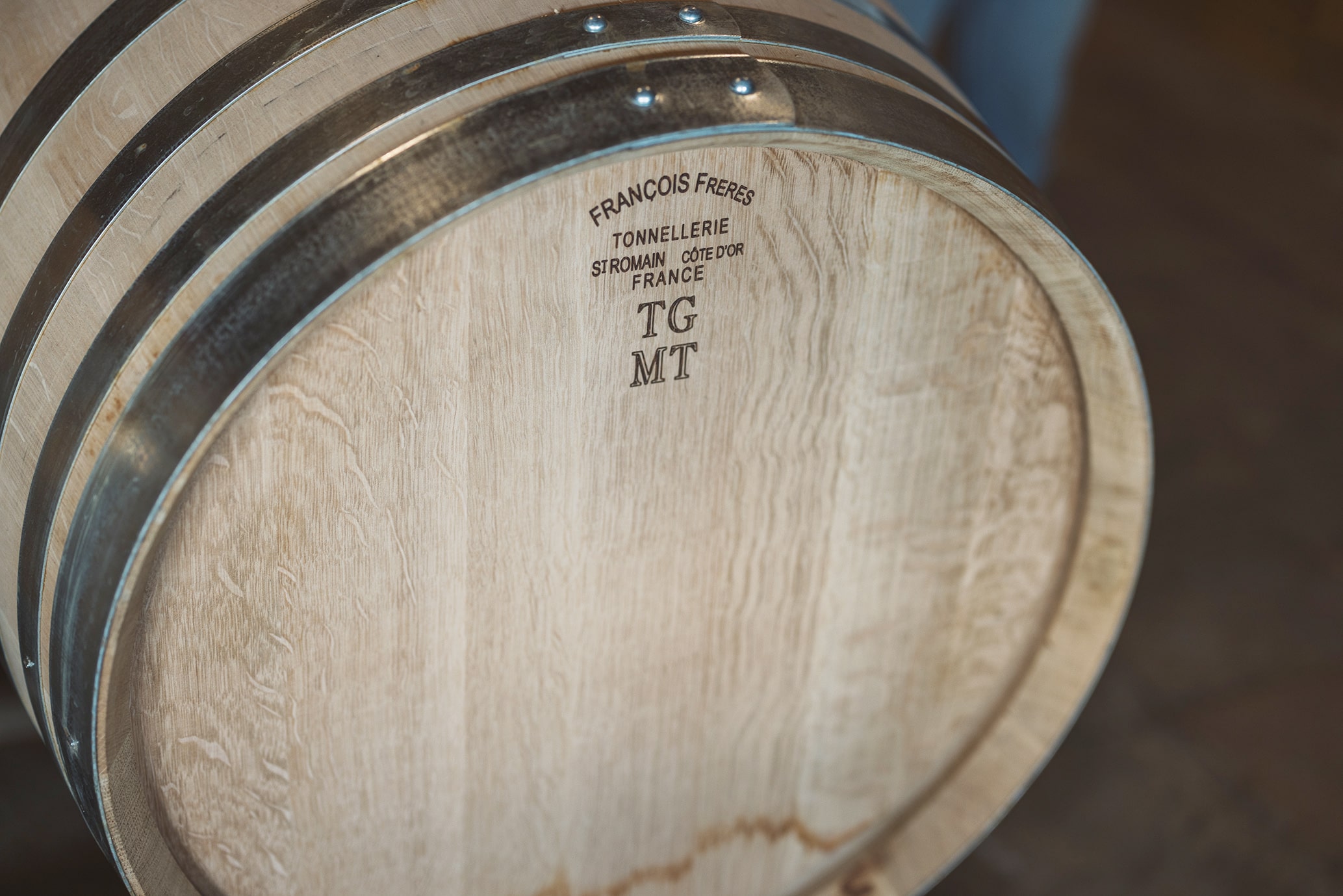
平山 はい。搾りかすを発酵させて畑に戻す循環くらいですね。収穫数を増やすことを目的とすると、肥料を多く入れたがりますけど、抑えましょうと。そうすれば農薬も少なくて済みます。
ワインには、酒石酸というぶどうにしかない酸があります。酸というのは殺菌作用も強いんですね。だから、ある意味品質が安定するんです。技術が要らないので世界中にあるんですよ。畑が違うと味が変わって当たり前で、その年ごとに味が違っても構わないと考えています。技術ではなくて場所だから、というのが芯にある考え方です。だからなるべくつくり込まない。菌を含めてです。日本酒などの場合は、技術を持つ人がよりよい場所に動いていき、技術があるから産地になっていく。ワインの場合はいいぶどうがあるから産地になっていくんですよね。
うちのワインは、飲んだあとに「ちょっとホッとした」と誰もに思ってもらえるような自然を感じられるものを目指しています。自然派ワインという分類がある中で、うちは自然派とは違うと考えていて、それは僕の意思を入れていないからです。
HIRAYAMA Yes. The only thing we do is return the fermented grape pomace to the vineyard as part of a natural cycle.
If your goal is to increase yield, you tend to want to add more fertilizer — but I always say, let’s hold back. That way, you can also reduce the amount of pesticides.
Wine contains tartaric acid, a type of acid found only in grapes. Acidity has strong antibacterial properties, so in a sense, it helps stabilize the quality. That’s why winemaking exists all over the world — it doesn’t require much technique at its core. Different vineyards naturally produce different flavors, and I believe it’s perfectly fine for the taste to vary from year to year. The foundation of my thinking is that wine is about place, not technique. So I avoid over-manipulating it as much as possible — including when it comes to yeast.
With sake, for example, skilled craftsmen move to better production sites, and places become known as producing regions because of their technique. But with wine, a place becomes a producing region because it has good grapes.
HIRAYAMA:What I aim for is a wine that, after drinking it, leaves anyone feeling “a little relieved” — something that makes you sense nature.
There’s a category called natural wine, but I don’t consider ours to fall under that. That’s because I don’t impose my own will on the wine.
今井 意思とはどういうことですか? 自然というものをどう捉えているか聞きたいです。
IMAI What do you mean by “your own will”? I’d like to hear how you perceive the idea of nature.
平山 自然というのは人の意思が入っていなくて止められないんです。山の葉っぱもそうですし、富士山がいまは見えるけどすぐに雲がかかったり。一瞬一瞬動いていますよね。都会の人にとって重要なのは情報です。情報はつねに新しいものに更新しないといけなくて、新しいものを自ら取りに行く必要もある。そうして情報が心身に溜まっていった人たちにどうやってひと息ついてもらうか、というところを考えているんです。狙ってつくるよりも、毎日変化しながら止めないということが大事です。
そして、自然と都会を結んでいるところが里山だと僕は考えています。程よい人の関与がありますよね。僕たちが勝手に思い込んでいる宗教ではない神様がいて、その祠にお参りに行く人がいて、ワンカップが置いてあったりします。その辺りが自然への入口で、自然と人とのつながりをつくっていて、そんな里山を大事にしていく必要があると考えています。
HIRAYAMA Nature is something that carries no human will, and it cannot be stopped. The leaves on the mountains are like that, and Mount Fuji may be visible one moment and then instantly covered by clouds the next. It’s constantly shifting from moment to moment.
For people in the city, what matters most is information. Information must always be updated, and they must actively seek out the newest things. I’ve been thinking about how to offer a moment of relief to people whose minds and bodies are filled with accumulated information. Rather than creating something with intention or control, what matters is allowing things to keep changing day by day without stopping them.
And I believe the place that connects nature and the city is the satoyama, the managed landscapes between villages and forests. There’s a modest level of human involvement there. There’s a kind of unspoken deity — not tied to any formal religion — and people visit the small shrine, leaving offerings like a cup of sake. That area, to me, is an entrance to nature, forming a link between people and the natural world. I believe we need to cherish these satoyama landscapes.
今井 とてもおもしろいですね。そう思うようになったきっかけはあるんですか?
IMAI That’s fascinating. Was there something that led you to think this way?
平山 その土地において、何もしなくてもその場所だから他よりも飛び抜けたものになっていることを僕たちは場所文化と呼んでいます。場所文化フォーラムという団体をつくって日本中を回らせてもらったときに、地方と都会の違いに山と川、海が関係していることに気づきました。つまり自然がすべて関係していて、地域らしさというのは必ず自然からきているんです。その自然を大切にすることが、地域らしさを続けていくことではないかと仲間と話していました。
里山では、当然木を切って切りっぱなしにはしてきませんでした。山を守りつなげていくことを大事にしていたはずです。現代になって、すべてお金に変えるために息苦しくなってしまった。立ち木所有という権利が山にはあり、枯れ木や落ちた枝、下に生えているきのこや山菜はみんなで共有しましょうという世界が里山にはあった。里山を学ぶことで豊かな日本が復活するのではないかという考え方が僕の根っこにはあります。元々山のそばに人が暮らしていたのは薪があるからですもんね。
HIRAYAMA In each place, there are things that become exceptional simply because they belong to that specific land, even without us doing anything. We call this place culture. When we created the Place Culture Forum and traveled around Japan, I realized that the differences between rural areas and cities are shaped by mountains, rivers, and the sea. In other words, nature is connected to everything, and a region’s identity always comes from its natural environment. My colleagues and I talked about how cherishing nature is what allows a region’s character to endure.
In satoyama, people of course never just cut trees and leave them. They valued maintaining and passing down the mountains. But in modern times, everything has become tied to monetary value, and that’s created a kind of suffocation. In the mountains, there are rights to standing trees, but things like fallen branches, deadwood, mushrooms, and wild plants were resources meant to be shared by everyone. Satoyama once held that kind of shared world. I believe that rediscovering satoyama could revive a richer Japan. After all, people originally lived near the mountains because they had firewood.
今井 薪がエネルギーでしたね。
IMAI Firewood was our source of energy, wasn’t it?
平山 自然はなくなっていないはずで、人間側が自然の方に介入しなくなっただけだと思っています。自然が持つものと我々の持つものをうまく共有する共同体がなくなってしまった。それは僕たちが個人主義になっているからどんどん離れているんです。そして昔は、自分たちの声よりも亡くなった人、つまり昔の人の声を聴いていました。山の神様の声に耳を傾けたからお祭りが生まれたんですよ。でもそのお祭りが減ってきている。なぜなら個人主義になってきたからです。だから自然が人間から遠のいています。
今井さんは、木こりとして山に入りながら自然をどのように考えていますか?
HIRAYAMA Nature itself hasn’t disappeared — it’s just that we humans have stopped engaging with it. The kind of community where people shared what nature provided and what humans could offer has vanished. We’ve become more individualistic, and that distance keeps growing.
In the past, people listened not to their own voices but to the voices of those who came before — the voices of the dead, the people of earlier generations. Festivals were born because people listened to the voices of the mountain gods. But those festivals are declining now, and the reason is increasing individualism. As a result, nature is drifting farther away from us.
How do you view nature, Imai-san, when you enter the mountains as a woodcutter?
今井 僕自身は自然に合うものを利用して生きているので、大切にしたいという思いがずっとありますね。山林労働者だったときは、おじいちゃんたちと一緒に山に入ってよく昔話を聞いていたんですけど、里山の話はまさにそうでした。昔は山が本当にきれいだったと。落ち葉を掻き、枯れ枝は拾い、堆肥などに使っていて、山の視界が抜けていたみたいです。今から25年ほど前の話ですが、おじいちゃんたちはマムシを捕まえてその場で捌いて刺身で食え、と言いました。僕にはとても無理でしたが原始的でしたね。マムシを食べることが普通で、野蛮だとは思っていなかった。さらに話を聞くと、親父が中学生のときに戦争で死んで、できることが山の仕事しかなくてという感じで。彼らの自然に対する考え方というのは、エネルギーとか哲学や思いとか何もない。それしかないからそれをやっていた。僕から見るとある種崇高に見えましたね。
IMAI For me, since my life depends on using what harmonizes with nature, I’ve always had the desire to treat it with care. When I worked in the mountains as a forestry laborer, I often went in with the old men, listening to their stories. What they told me about satoyama was exactly what you described. They said the mountains used to be truly clean — people would rake up fallen leaves, gather dead branches, use them for compost, and the whole forest was open and easy to see through.
This was about 25 years ago, but the old men would catch a pit viper, butcher it right there, and tell me to eat it as sashimi. I couldn’t bring myself to do it, but it was primitive in the purest sense. Eating a snake wasn’t considered wild or barbaric — it was simply normal.
And as I heard more stories, I learned that some of them had lost their fathers in the war when they were still in middle school, and the only work they could do was in the mountains. Their relationship with nature had nothing to do with energy, philosophy, or ideology. They simply did what they had to do because that was the only option.
From my perspective, there was something almost sacred about their way of life.
平山 都会では100%自然を感じられる場所がないんですよね。でも人間がバランスを取るためには自然が絶対必要なんですよ。都会で自然に近いものが、絵画や美術などのアートだと思っています。アートは都会で生まれて都会のオアシスになるという考え方です。地方で生まれるアートは民謡みたいな話で、フォークですよね。アートは都会の人のバランスを取っていますが、アートだけでは追いついていないと思っています。
HIRAYAMA In the city, there’s no place where you can experience nature at 100%. But humans absolutely need nature in order to stay balanced. I believe that the closest thing to nature in an urban environment is art — painting, fine art, and creative expression. Art is something that’s born in the city and becomes an oasis within it.
Art born in rural areas is more like folk songs — like traditional folk culture. Urban art helps city dwellers regain their balance, but I don’t think art alone is enough to keep up.
今井 おもしろい考え方ですね。僕はいま、東京と山梨を行き来していて、都会が元々苦手な人間なので住むことは考えられませんでしたが、いまは半分以上は東京にいるんですよ。都会から帰ってくると山梨の自然の尊さがよくわかります。平山さんは、豊かさの概念をどうつくっていきたいと考えていますか?
IMAI That’s an interesting way of looking at it. I’m currently going back and forth between Tokyo and Yamanashi. I’ve never been good with big cities, so I couldn’t imagine living in one — but now I spend more than half my time in Tokyo. And every time I return from the city, I feel a renewed sense of how precious Yamanashi’s nature is.
How do you envision shaping the concept of richness or a fulfilling life?
平山 僕がやってみたいのは、残すべきものを残していくこと。それは自分の価値観でいいと思っていて、例えば潰れかかっている温泉街とか。本物というのはどこにでもあるわけじゃないので、残していった方がいいと純粋に思えるものを残したいですよね。今井さんはどうですか?
HIRAYAMA What I want to do is preserve the things that truly should be preserved. And I believe it’s fine to decide that based on my own values — for example, an old hot-spring town that’s on the verge of disappearing. Authentic things don’t exist everywhere, so I simply want to keep the ones that I genuinely feel are worth passing on. What about you, Imai-san?
今井 北杜市に来た20年前といまを比べると人も減り、町も小さくなってどんどん廃れていっているんですよね。そういう意味での豊かさはなくなったと感じています。昔は、人との人とのつながりが豊かだったように思いますよね。部落の祭りで酔っ払って誰かが喧嘩して、それを周りが止めてて、結局笑い話になっているという関係の方が、都会のラグジュアリーよりもよっぽどいい。お金や情報がよりある方が豊かだと示されているところにいると、ますますそっちの方に魅力を感じるので、人と人とのつながりをもっと増やしていきたいですね。
IMAI Compared with twenty years ago, when I first came to Hokuto City, the population has declined, the town has shrunk, and things have been steadily fading away. In that sense, I feel that a certain kind of richness has been lost. I think people’s connections used to be much stronger. At local village festivals, someone would get drunk and start a fight, others would step in to stop it, and eventually it would all turn into a funny story — that kind of relationship feels far better to me than the luxury of the city. When you live in a world where wealth and information are seen as the markers of richness, you naturally start to feel drawn in that direction. That’s why I want to create more opportunities for people to connect with each other.
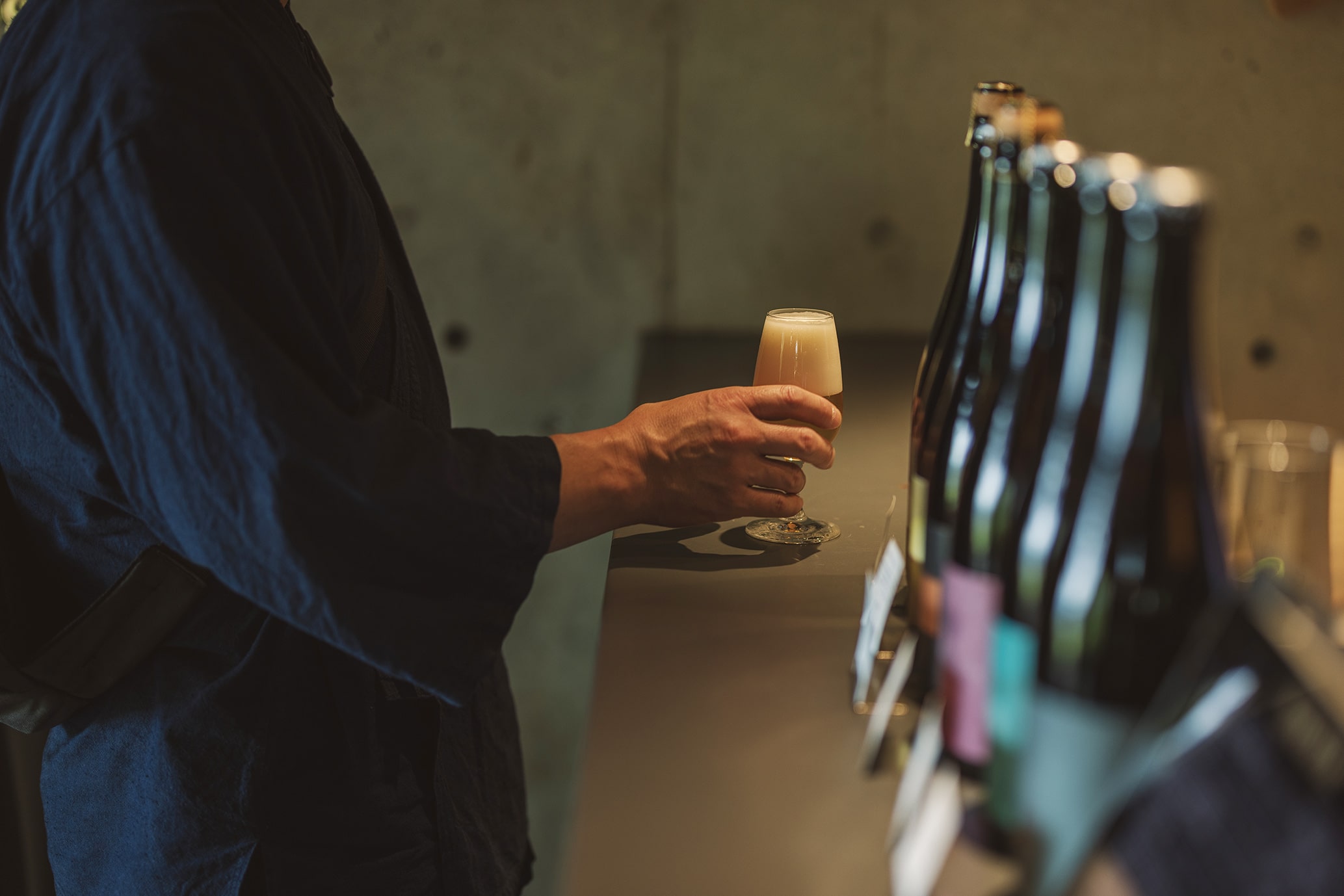
甲州市塩山で甲州ブドウに特化したこだわりのワインを作るワイナリー。さらに、車で3分ほどの場所にブルワリー「98BEERs」を併設した森の中の宿「STAY366」も2022年に開業。
A winery in Enzan, Koshu City, dedicated to crafting wines made exclusively from Koshu grapes.
In 2022, they also opened STAY366, a forest lodging facility located about a three-minute drive away, which includes an on-site brewery, 98BEERs.
【SHOP DATA】
98WINEs
山梨県甲州市塩山福生里250-1
250-1 Fukasato, Enzan, Koshu City, Yamanashi Prefecture
☎0553-32-8098 OPEN : Saturdays & Sundays, 9:00–17:00
98BEERs
山梨県甲州市塩山福生里462-1
462-1 Fukasato, Enzan, Koshu City, Yamanashi Prefecture
☎0553-32-6598 OPEN : Saturdays & Sundays, 10:00–16:00